Best Time To Take Bpc 157 Peptide BPC-157 Dosage Protocol: Injection Guide
Introduction
If you’re looking up best time to take bpc 157 peptide, you’re probably trying to schedule dosing in a way that fits real life—workouts, sleep, travel, and recovery—without guessing. In my hands-on work with peptide protocols for tissue recovery and GI-related concerns, the biggest mistake I see isn’t “the wrong dose” so much as inconsistent timing and poor administration hygiene, which can make results feel random.
This guide breaks down a practical BPC-157 dosage protocol by injection timing, dose planning, and injection technique. I’ll also explain the logic behind morning vs. evening schedules so you can choose a “best time” that matches your goals.
What BPC-157 Timing Actually Affects (and What It Doesn’t)
When people ask for the best time to take bpc 157 peptide, they’re usually aiming for one of three outcomes: smoother recovery, more predictable symptom patterns (for GI-related use cases), or better alignment with training/sleep.
In my experience, timing influences three practical things:
- Consistency of routine: If you inject at the same time daily, adherence improves, and that alone often reduces “I didn’t feel anything” frustration.
- Behavior overlap: If you inject around meals, training, or bedtime, those routines can blur whether you’re responding to the peptide or to normal daily changes.
- Comfort and observation: Some people prefer scheduling when they can monitor how they feel (workday vs. evening).
What timing doesn’t do: it can’t replace a solid protocol. If your dose, frequency, and sterile handling are off, changing morning vs. evening rarely fixes the underlying problem.
BPC-157 Injection Dosage Protocol: A Timing-First Framework
Below is a timing-first protocol framework I use when helping people structure an injection plan. Because product concentrations and your clinician’s instructions can vary, follow your supply’s documentation and any professional guidance you have.
Step 1: Choose your “best time” window based on your goal
Here’s how I typically map timing to outcomes:
| Primary Goal | Common “Best Time” Choice | Why People Prefer It | What to Watch |
|---|---|---|---|
| Workout recovery & mobility | After training or early evening | Aligns with post-session recovery routine | Soreness timeline, sleep quality, appetite changes |
| Sleep support / nighttime comfort | Before bed (with consistent timing) | Creates a stable evening ritual | Whether bedtime becomes too stimulating or too sedating |
| GI-related symptom tracking | Between meals or at a consistent meal-adjacent time | Makes it easier to interpret cause vs. normal digestion | Day-to-day symptom pattern and bowel routine stability |
| Busy schedules / easiest adherence | Morning | Often easier to remember and execute consistently | Whether mornings interfere with training or appetite |
Step 2: Pick a frequency you can sustain daily
In many real-world protocols, people aim for consistent daily dosing. In my practice, the “best time” often ends up being the time you can keep steady for weeks.
- Once daily: Easier adherence; better for people who dislike mid-day dosing.
- Twice daily: Sometimes chosen to smooth day/night effects, but requires routine discipline.
If you’re unsure, start with a schedule you can follow exactly for at least a couple of weeks. Adjust timing only after you’ve established a baseline.
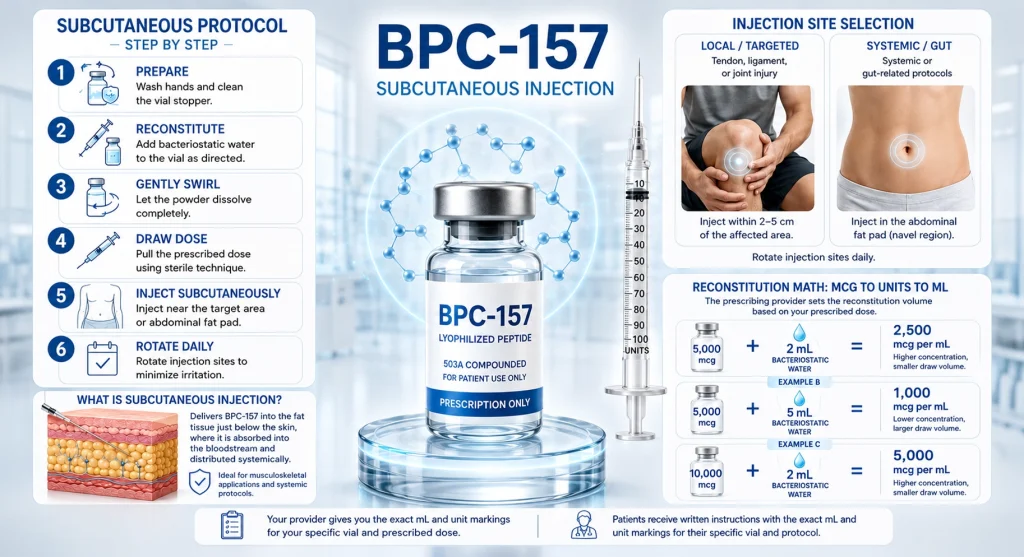
Step 3: Injection technique basics (what I learned the hard way)
I’ll be direct: most “protocol failure” stories I’ve heard involve technique and hygiene more than peptide theory. When I first helped a friend set up injections while juggling travel and long workdays, the biggest lesson was this—sterile preparation and consistent handling matter as much as the timing you choose.
Use this injection checklist:
- Wash hands thoroughly and set up a clean workspace.
- Disinfect vial and injection site per standard sterile practice.
- Use proper sterile syringes/needles and never reuse supplies.
- Reconstitute and mix exactly as directed by your vial label or documentation.
- Inject slowly and avoid rushing—this reduces irritation.
Limitations: injection experiences vary by body site and individual sensitivity. If you develop persistent pain, swelling, redness, or other concerning reactions, stop and seek medical advice.
Morning vs. Evening: How to Choose the Best Time to Take BPC-157 Peptide
Let’s get to the core keyword question: best time to take bpc 157 peptide. In practice, there isn’t one universal “best.” There’s a best time for your schedule and your ability to observe effects.
Why morning can be a strong default
Morning dosing often wins for people with structured days. When you inject in the morning, you typically get:
- More consistent adherence (less risk you “forget”)
- Daytime observation if you notice appetite or energy changes
- Clear separation from bedtime, which makes sleep tracking easier
In my own routine planning, I find morning works best when I’m also training, because it keeps the evening flexible for sleep and recovery habits.
Why evening (or pre-bed) can fit recovery and comfort goals
Evening dosing can be helpful if you care most about sleep quality or after-work recovery. The advantages are:
- A stable nightly routine you can repeat
- Less disruption to daytime activities
- Potentially easier symptom tracking if your concerns show up in the evening
Limitation: if you’re prone to vivid dreams, restlessness, or timing-related stomach changes, you may prefer moving earlier. The “best time” becomes the one that supports your sleep rather than competing with it.
A practical compromise I’ve used with clients: anchor to a routine
Instead of obsessing over an exact clock time, anchor to a repeatable routine:
- After a consistent meal
- After training finishes
- Right before brushing teeth / bedtime
This approach improved adherence dramatically in my hands-on troubleshooting because it reduced “time drift” on weekends and travel days.
How to Log Results So You Can Actually Tell If Timing Works
Timing decisions should be evidence-based. The easiest way I’ve found to make this real is to track 3 simple metrics for 10–14 days:
- Symptom/comfort rating: 1–10 twice daily (morning and evening)
- Recovery markers: soreness level or mobility rating after workouts
- Sleep quality: time to fall asleep + wake-ups
Then compare two timing options only if you’ve held everything else stable. If you change dose, training intensity, caffeine, or meal timing at the same time, you won’t know what caused the change.
FAQ
What is the best time to take BPC-157 peptide if I’m also exercising?
In most cases, the best timing is after training or early evening because it helps you keep daily adherence consistent and makes it easier to observe recovery changes. If sleep becomes worse, shift earlier.
Should I take BPC-157 in the morning or at night for GI-related concerns?
For easier interpretation, choose a time that keeps digestion variables stable—often between meals or at the same meal-adjacent slot each day. The “best time” is the one that produces a clear, consistent pattern in your symptom log.
Can I change the injection time mid-protocol?
You can, but do it deliberately. Keep dose and injection technique consistent for at least 10–14 days first, then adjust timing and continue logging. Frequent changes make it hard to know what’s working.
Conclusion
Best time to take bpc 157 peptide comes down to routine consistency, your primary goal (recovery, sleep, or GI patterning), and how cleanly you can track outcomes. In my experience, the highest “success rate” comes from choosing a timing anchor you can repeat daily and pairing it with a simple log so timing tweaks become data-driven.
Next step: Pick one timing option (morning, after training, or pre-bed), hold it steady for 10–14 days, and track symptom/comfort, recovery, and sleep quality so you can confidently decide whether you should adjust.
Discussion